
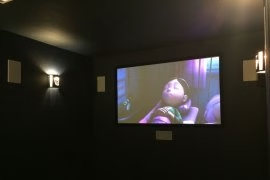
- By admin
- In Uncategorized
Home Theater Game Plan: Design a Setup That Fits Your Room—and Your Family
Most home theaters don’t fit your room or the way your family watches. You might think a bigger screen always means better, but that’s where many setups go sideways. Getting the right size, speaker placement, and wiring plan tailored to your space makes all the difference—and that’s exactly what good home theater planning looks like. Ready to build your perfect setup? Request your free in-home assessment and quote with TSGSAN today—let’s mount it, wire it, and dial it in right the first time.
Planning Your Home Theater
Creating a home theater that perfectly matches your room starts with understanding what you need. Let’s break it down step-by-step.
Understanding Your Room’s Needs
Every room is unique, and so are its needs. Start by evaluating the space you have: Measure the room’s dimensions, noting any windows, doors, or other obstructions. Consider how these elements will affect screen placement and sound distribution. This understanding helps you tailor your setup to make the most out of your space.
Think about where people will sit and how many will typically watch together. The room’s size influences the type of screen and speakers that will work best, ensuring everyone gets a great view and sound. By focusing on your room’s specifics from the start, you set the stage for a successful home theater installation.
Budget-Friendly Setup Tips
You don’t need to break the bank to enjoy a fantastic home theater experience. Set a clear budget and prioritize essentials like a quality screen and good sound. Look for deals on refurbished or open-box items to stretch your dollars further. These smart shopping strategies can help you save money without sacrificing quality.
Think about which features are must-haves and which are nice-to-haves. For example, investing in a decent sound system can significantly enhance your viewing experience. Remember, a well-planned budget is like a map to guide your spending decisions, ensuring you stay on track and get the best value.
Family Viewing Habits
Your family’s viewing habits play a crucial role in home theater planning. Do you love family movie nights, or are you more into hosting big game-day watch parties? Understanding these habits helps tailor the system to fit your lifestyle. When everyone gets what they need, your theater becomes a favorite gathering spot.
Take a moment to discuss with your family what you all enjoy watching together. This conversation can guide decisions about screen size, seating arrangements, and sound systems. Your home theater should enhance your family’s entertainment experience, making it an enjoyable place for everyone.
Choosing the Right Equipment

Once you understand your room and budget, it’s time to choose the right equipment. This choice can make or break your theater experience.
Projector vs TV: Pros and Cons
Deciding between a projector and a TV depends on your priorities. Projectors offer a cinema-like experience with large screens, ideal for spacious rooms. They can create an immersive feel, especially for movie buffs. However, they may need more maintenance, including bulb replacements and careful calibration.
On the other hand, TVs are easy to set up and often come with smart features. They’re great for everyday viewing and work well in smaller spaces. TVs also tend to deliver brighter images, making them suitable for rooms with more natural light. Weigh these pros and cons to find the best fit for your setup.
Optimal Screen Size and Viewing Distance
Choosing the right screen size is crucial for comfort. Use a viewing distance calculator to find the perfect balance. Generally, your screen’s width should be about one-third the distance from the seating area. This rule of thumb ensures viewers can see the whole screen without straining their eyes.
Consider the room size and seating arrangement when deciding on screen size. A screen that’s too big can overwhelm a small room, while a screen that’s too small may leave viewers squinting. By calculating the optimal size, you ensure everyone enjoys a clear, comfortable view.
Dolby Atmos 5.1.2 Speaker Placement
Speaker placement can dramatically affect sound quality. For a Dolby Atmos 5.1.2 setup, position speakers to create an immersive experience. Place the center speaker directly in front of viewers, and the surround speakers slightly behind. The subwoofer should be near the front for deep bass effects.
Consider the height and angle of your speakers to enhance sound delivery. Ceiling speakers can add an overhead dimension for a truly cinematic experience. Correct placement ensures sound reaches every corner of the room, enveloping your audience in rich, dynamic audio.
Installation and Setup
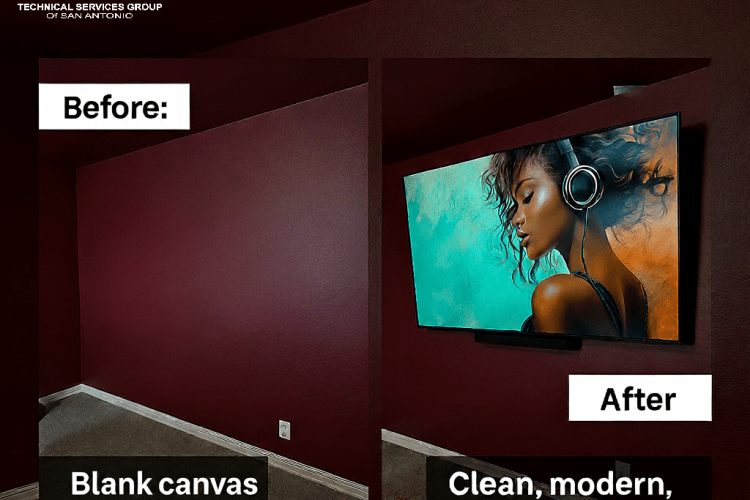
With your equipment ready, it’s time to focus on installation. Proper setup transforms components into a unified system.
TV Mounting and In-Wall Wiring
Mounting your TV securely ensures a clean look and safety. Professional TV mounting services in San Antonio offer expertise in handling different wall types, from sheetrock to brick. This ensures your screen stays put, avoiding costly mistakes and potential damage.
In-wall wiring keeps your setup tidy by hiding cables. This not only looks better but also prevents tripping hazards. Proper cable management with cord concealment solutions ensures your home theater is as functional as it is stylish.
Smart Lighting Scenes and Universal Remote
Smart lighting can elevate your viewing experience. Set up smart lighting scenes to dim lights during movies or brighten them for social gatherings. This technology adds a touch of luxury and convenience to your home theater.
A universal remote simplifies control by managing all your devices from one place. No more juggling multiple remotes—just seamless operation with a touch. Programming the remote to work with your entire system ensures easy access to all features, enhancing user experience.
Soundproofing Basics and Acoustic Panels
Soundproofing improves your theater’s acoustics and keeps sound from spilling into other rooms. Adding acoustic panels can reduce echoes and enhance clarity. These panels absorb sound reflections, creating a more immersive listening environment.
Consider installing additional soundproofing layers, such as heavy curtains or specialized insulation. This not only enhances audio quality but also lets you enjoy movies without disturbing others in the house. Proper soundproofing transforms your room into a true cinematic escape.
Frequently Asked Questions
What is the ideal viewing distance for a home theater?
The ideal viewing distance is about three times the screen’s height. This provides a comfortable view without straining the eyes.
How do I choose between a projector and a TV?
Consider your room size and usage. Projectors suit larger spaces and cinematic experiences, while TVs are more practical for daily use in smaller rooms.
Why is speaker placement important in a home theater?
Correct speaker placement ensures sound is evenly distributed, creating a rich and immersive audio experience.
What should I consider for soundproofing my home theater?
Use acoustic panels and heavy curtains to reduce noise and improve sound quality. These measures prevent sound from leaking into other rooms.
How can smart lighting enhance my home theater?
Smart lighting allows you to create custom scenes that enhance the viewing experience, such as dimming lights for movies or brightening them for games.